

The resilience documented in this report—the ability to absorb a 30% surge in new clients and maintain an 87% viral suppression rate—is built on a complex and increasingly fragile financing structure. To meet the needs of nearly 258,000 clients served in CY2024, ADAPs have had to navigate stagnant federal funding by aggressively leveraging alternative revenue streams and maximizing the statutory flexibility of the RWHAP Part B program.
The Fiscal Landscape: Appropriations and Allocations
Funding for the RWHAP Part B program is distributed through a formula and eligibility-based mechanism that includes five distinct categories: Part B Base, Part B Supplemental, Part B ADAP Earmark, Part B ADAP Supplemental, and ADAP Emergency Relief Funding.
In FY2024, the total Congressional appropriation for RWHAP Part B programs (n=59) was $1.41 billion. Of this, $899.8 million (64%) was awarded by HRSA specifically to ADAPs via the ADAP Earmark and Supplemental awards. While the overall Part B appropriation saw a modest 5% increase compared to FY2023, funding specifically earmarked for ADAP remained virtually flat.
Federal awards alone are insufficient to meet the escalating needs of clients. To bridge this gap, states have utilized the flexibility inherent in the Ryan White CARE Act, which allows Part B programs to allocate a portion or all of their Part B Base and Supplemental awards to ADAP. In FY2023, 31 jurisdictions exercised this option, transferring funds that represented 7.9% of their overall ADAP budgets. This intra-program flexibility is a vital "shock absorber" that allows health departments to shift resources to medication access during periods of high demand.
Additional sources that may be available to ADAPs include RWHAP Part A allocations (5 states in FY2024), carry-over from prior Part B Base or ADAP Earmark awards, state general revenue funding, and Ending the HIV Epidemic funds (2 states in FY2023).
The Structural Shift: Reliance on Rebates
Despite these federal allocations, the primary driver of ADAP solvency is no longer Congressional appropriations, but revenue generated through the 340B Drug Pricing Program. Rebates—payments received from pharmaceutical manufacturers after full or partial payments for medications—have become the dominant funding source.
- Dominance of Rebates: In FY2024, rebates constituted 52% of the overall ADAP budget, dwarfing the 29% contribution from federal ADAP earmark funding.
- Retaining Revenue: The strategic behavior of states has shifted to protect this revenue stream. In FY2019, 73% of rebates received were applied to ADAP budgets, with the remainder often shared with the broader Part B program. By FY2024, that figure rose to 86%.
This data reveals a system where ADAPs are retaining nearly every dollar of generated revenue to keep pace with demand. The result is a total ADAP budget that reached $2.7 billion in FY2024—a 35% increase over 2019 levels. While this growth is impressive, it is entirely dependent on a revenue mechanism that is subject to intense market and regulatory volatility.
Total ADAP Budget, By Source, FY1996–FY2024
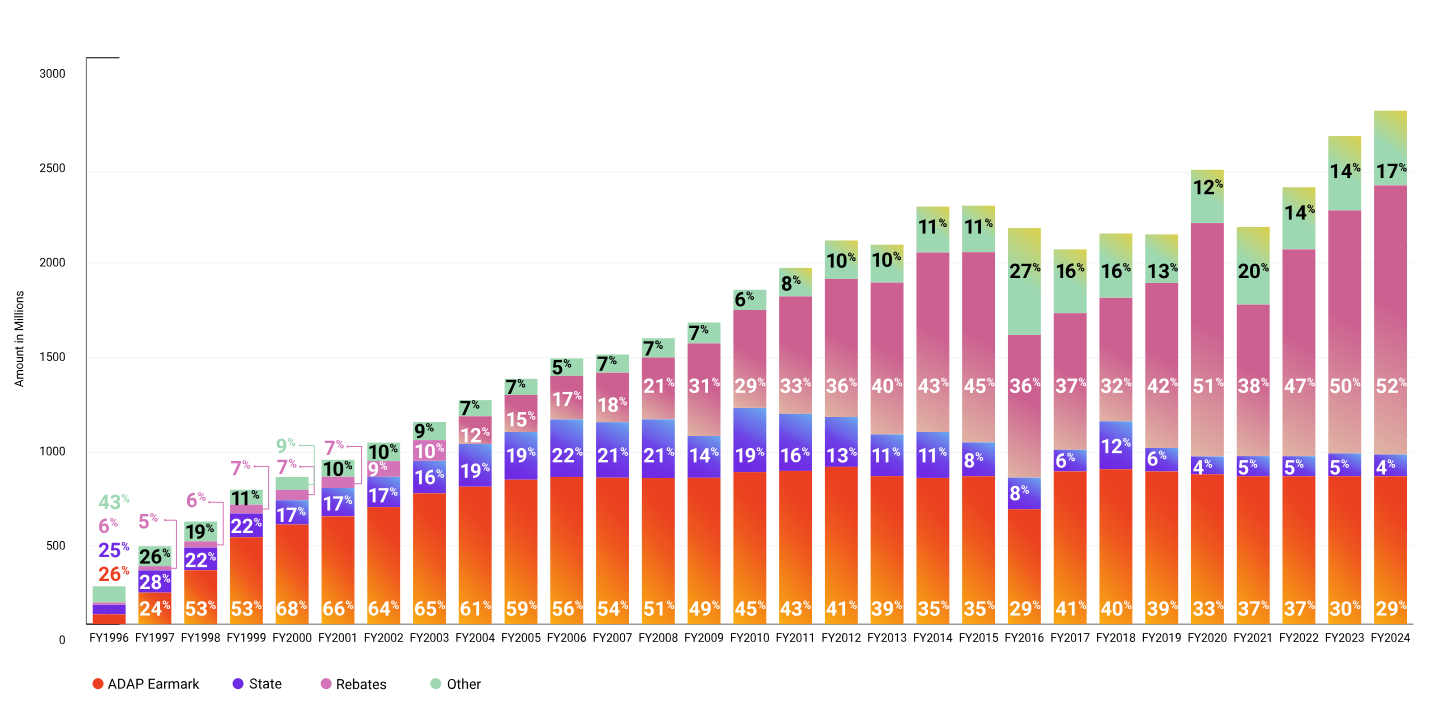
Note: 49 Part B programs reported data. American Samoa, Federated States of Micronesia, Guam, Marshall Islands, Mississippi, Northern Mariana Islands, Republic of Palau, Virgin Islands (U.S.), and West Virginia did not respond. "Other" ADAP budget sources consist of Part B Base contribution allocated to ADAP, Part B Supplemental allocated to ADAP, Part B ADAP Supplemental, ADAP Emergency Relief Funding, program income (including 340B) retained by ADAP, Ending the HIV Epidemic (EHE) allotments, and other/miscellaneous funds. Rebates are tracked separately from front-end discounts and account for both repayment to ADAP from a manufacturer for a drug expenditure and any additional savings generated.
The IRA Paradox: Reduced Revenue from Medicare Part D
While rebate reliance is high, the mechanism for generating these funds is under threat due to major changes in Medicare Part D under the Inflation Reduction Act (IRA) of 2022.
These changes, which remove the coverage gap ("donut hole") and cap annual out-of-pocket (OOP) drug costs at approximately $3,300 in 2024 ($2,000 in 2025; $2,100 in 2026), are monumentally important for Medicare beneficiaries, protecting seniors from unlimited high drug costs. However, they create a fiscal paradox for ADAPs.
- Reduced Cost-Sharing: Because the OOP cap is significantly lower, ADAPs will make far fewer cost-sharing payments on behalf of clients enrolled in Medicare Part D.
- Reduced Rebates: ADAPs generate "partial-pay rebates" on these cost-sharing payments (in accordance with a 2005 HRSA Program Letter). A drastic reduction in ADAP spending on Medicare Part D leads to a corresponding reduction in the rebates generated from those claims.
This shift is expected to have a significant negative impact on ADAP budgets, particularly as the client population continues to age. ADAPs are losing a key revenue generation tool just as federal appropriations stagnate.
Cost Containment and Efficiency in Action
With federal funding flat and rebate potential shrinking, ADAPs must operate efficiently. Federal funds used by ADAPs for prescription drugs must be utilized “in the most economical manner feasible.” This mandate has driven ADAPs to implement robust cost-containment and formulary management strategies, along with maximizing the use of vendors to streamline service delivery and meet the evolving prescription drug needs of clients.
ADAPs utilize considerable flexibility in determining their formularies and implementing controls. Strategies employed by some ADAPs in CY2024 included:
- Formulary Management: Using tiered formularies or restricting non-HIV medications to contain costs.
- Prior Authorization: Implementing requirements for clinical criteria or step therapy to ensure appropriate utilization of high-cost drugs.
- Cost Caps: Establishing maximum cost-per-client or prescription caps to manage outliers in high-utilization cases.
ADAP Formulary Management Practices, CY2024
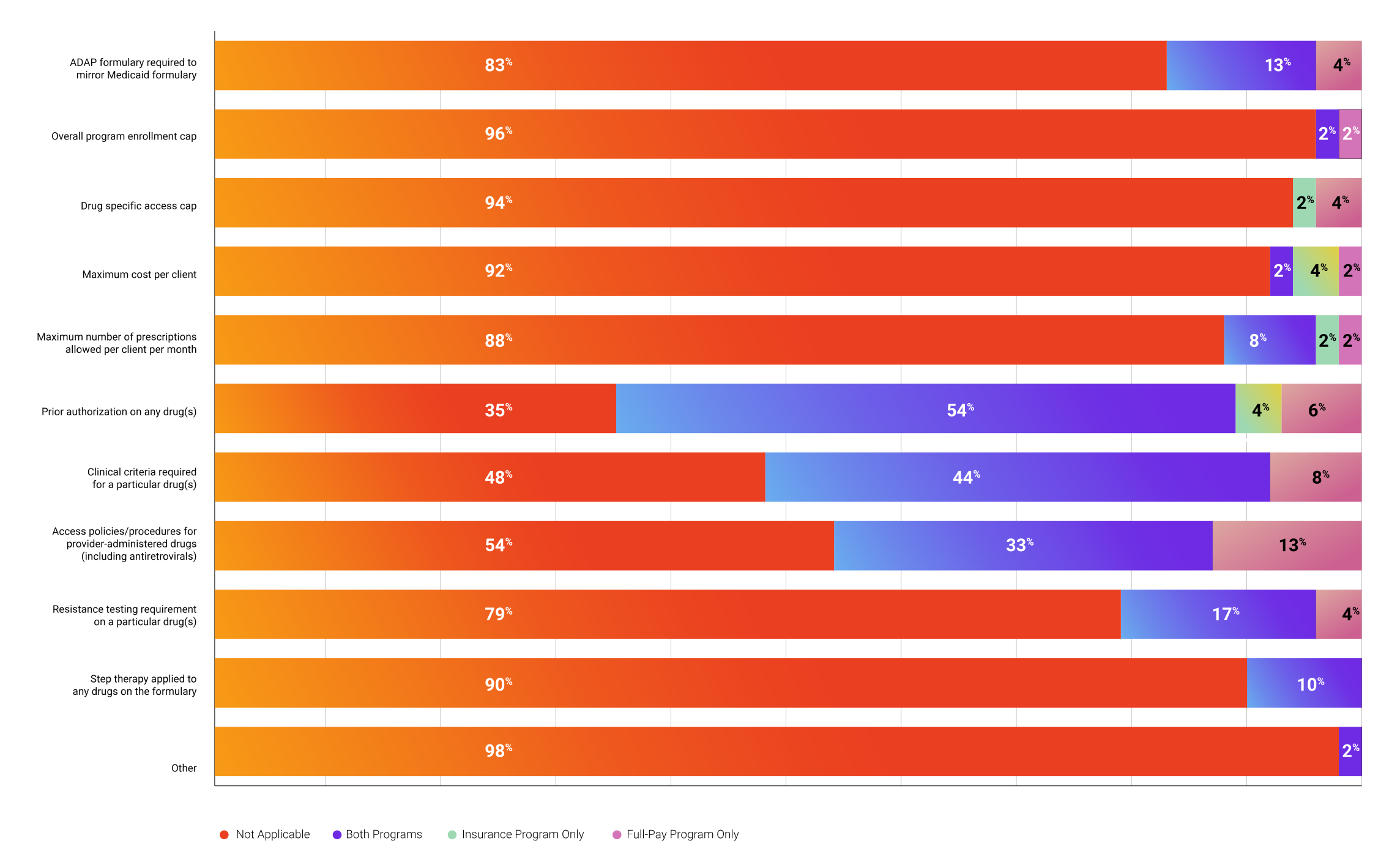
Note: 49 ADAPs reported data. American Samoa, Federated States of Micronesia, Guam, Marshall Islands, Mississippi, Northern Mariana Islands, Republic of Palau, Virgin Islands (U.S.), and West Virginia did not provide data.
Table Downloads
Beyond restricting costs, ADAPs have modernized their infrastructure to maximize the efficiency of every dollar spent. This involves shifting from simple payer models to sophisticated benefit management systems capable of navigating the complex modern pharmaceutical landscape.
To handle the complexities of pharmacy networks and provider-based access, contractual services have become essential. Of 49 programs providing data, 40 utilize Pharmacy Benefit Manager (PBM) services to negotiate pricing and manage dispensing logistics. Additionally, 9 programs now utilize Medical Benefit Manager (MBM) services, and 21 utilize Insurance Benefit Administrator (IBA) services, signaling a shift toward more comprehensive payer capabilities.
Additionally, a critical evolution in ADAP efficiency is the movement beyond the traditional "pharmacy benefit" model to a "medical benefit" model required for provider-administered drugs. As long-acting injectable and other provider-administered antiretrovirals become standard of care, ADAP clients are increasingly requiring support covering the costs associated with the administration of drugs in a clinic setting. Medical benefit coverage policies, as of July 1, 2025, illustrates this structural adaptation is underway but remains a work in progress compared to the initial baseline data (as of July 1, 2022) included in the 2023 Annual Report:
- Full-Pay Programs: As of July 1, 2025, 19 ADAPs paid for ARV drug administration costs, compared with 19 programs on July 1, 2022. Similarly, 16 programs pay for the associated office visit costs.
- Insurance Support: For insured clients, 21 ADAPs provided cost-sharing support for ARV administration as of July 1, 2025, compared to 20 programs in 2022.
- Gaps Remain: Despite the increasing clinical necessity of these drugs, 25 ADAPs reported in CY2024 that they do not yet provide medical benefit coverage.
This plateau suggests that while ADAPs recognize the need for medical benefit coverage, the administrative complexity of establishing these new reimbursement pathways remains a significant hurdle.