

The ultimate measure of ADAP efficacy is viral suppression—the key to both individual health and preventing onward transmission. However, to understand the magnitude of this achievement, one must first recognize the sheer scale of the population relying on this safety net program.
The Scope of the Safety Net
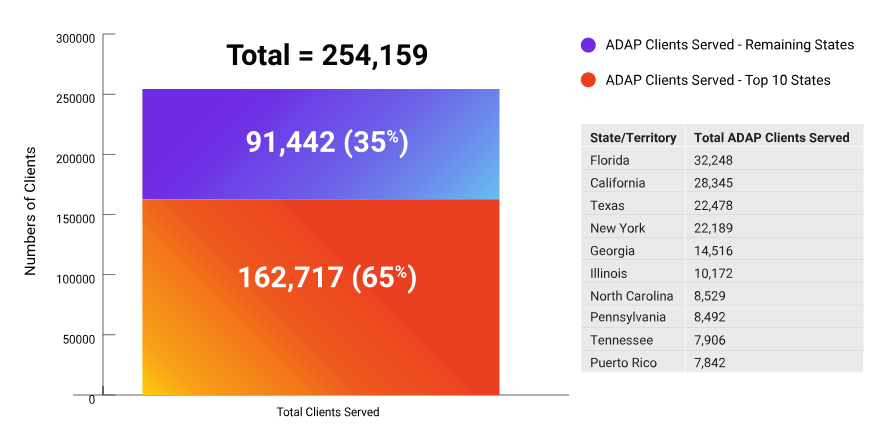
In CY2024, state and territorial ADAPs served 257,644 individual clients across 49 reporting jurisdictions, acting as the primary access point for nearly one-quarter (23%) of the 1.13 million people aged 13 years or older living with diagnosed HIV in the United States at the end of 2023. This volume represents a 7.5% increase over CY2019 levels, underscoring the growing reliance on the ADAP system even years after the full implementation of the Affordable Care Act.
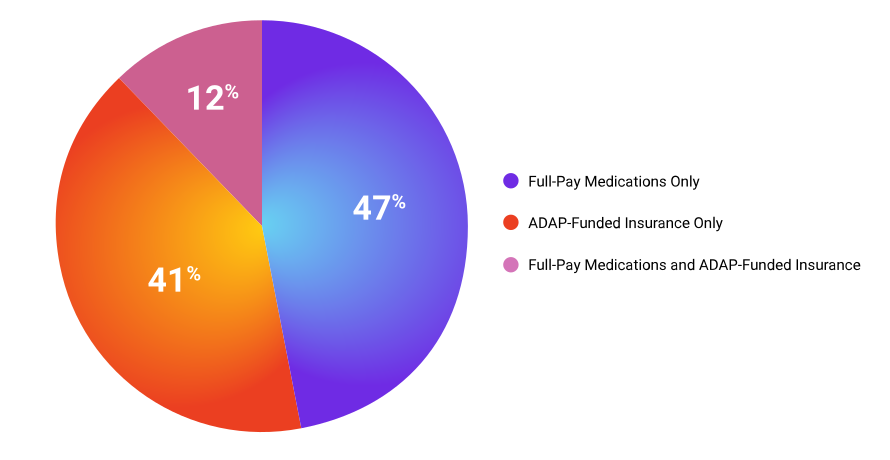
The data reveal a system operating as a responsive, hybrid payer designed to meet diverse client needs:
- 47% of clients relied solely on full-pay medication programs, utilizing the traditional safety net model.1
- 41% were supported exclusively through ADAP-funded insurance, receiving premium and cost-sharing assistance to maintain comprehensive coverage.2
- 12% utilized a dual approach, accessing both insurance support and full-pay medications to bridge critical coverage gaps.3
These enrollment figures form the foundation for the outcomes detailed below, establishing the scale at which ADAPs are delivering public health value.
ADAP Clients Served, by Program Type, CY2024
Note: 49 ADAPs reported data. American Samoa, Federated States of Micronesia, Guam, Marshall Islands, Mississippi, Northern Mariana Islands, Republic of Palau, Virgin Islands (U.S.), and West Virginia did not respond.
ADAP Clients Served and Top Ten States, CY2024
Note: 49 ADAPs reported CY2024 program data. American Samoa, Federated States of Micronesia, Guam, Marshall Islands, Mississippi, Northern Mariana Islands, Republic of Palau, Virgin Islands (U.S.), and West Virginia did not provide data.
Table Downloads
Delivering the Standard of Care: 87% Viral Suppression
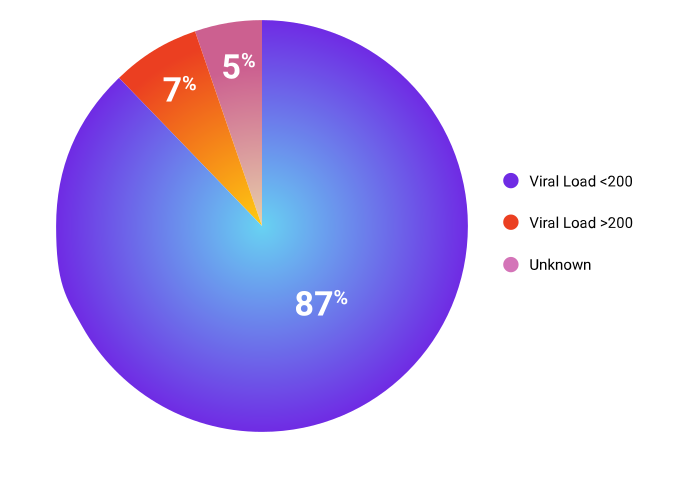
In CY2024, 87% of ADAP clients served by the 48 jurisdictions providing data were reported as being virally suppressed based on their most recent viral load recorded. When placed in the national context, the value of the ADAP intervention becomes clear: this 87% suppression rate is significantly higher than the estimated 67% suppression rate among all people living with diagnosed HIV infection in the United States.
This is not a static achievement but the result of a long-term upward trajectory in service delivery quality. In 2014, the earliest year in which these data were available, 63% of ADAP clients were reported as virally suppressed. By CY2019, that figure had risen to 74%. The jump to 86% in CY2024 is a testament to the increasing effectiveness of ADAPs in ensuring access to antiretrovirals (ARVs) and supporting adherence.
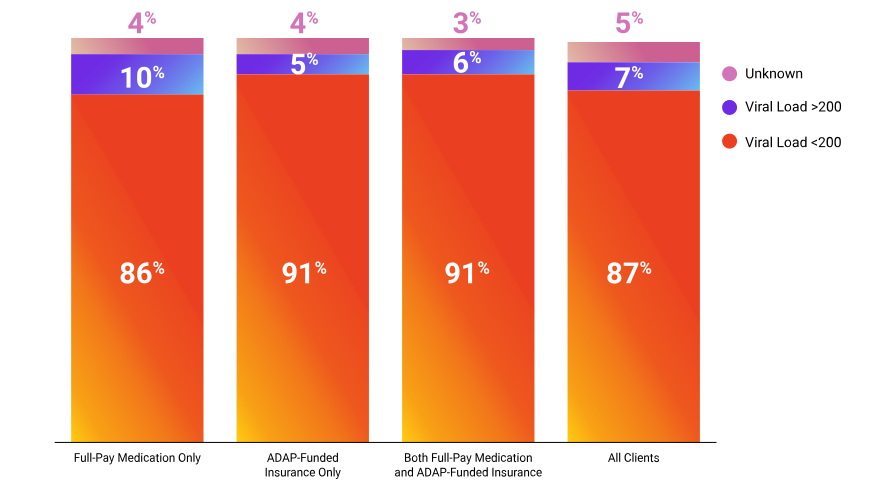
Crucially, ADAPs maintained high suppression rates across all service delivery models, though the data underscores the superior efficacy of comprehensive coverage. Clients supported by ADAP-funded insurance—either alone or in combination with full-pay services—achieved a 91% viral suppression rate, compared to 86% among those relying solely on the full-pay medication program. While the full-pay model acts as a vital safety net that still significantly outperforms national averages, this performance gap reinforces the value of the 'Insurance First' strategy: connecting clients to comprehensive health plans not only maximizes fiscal resources but correlates with optimal clinical outcomes.
Together, these data illustrate that ADAPs make meaningful contributions toward widespread viral suppression and, by extension, the goals of the EHE initiative.
ADAP Clients Served, by Viral Load, CY2024
Note: 48 ADAPs reported data. American Samoa, Federated States of Micronesia, Guam, Idaho, Marshall Islands, Mississippi, Northern Mariana Islands, Republic of Palau, South Dakota, Virgin Islands (U.S.), and West Virginia did not provide data.
ADAP Clients Served by Program, by Viral Load, CY2024
Note: 48 ADAPs reported data. American Samoa, Federated States of Micronesia, Guam, Idaho, Marshall Islands, Mississippi, Northern Mariana Islands, Republic of Palau, South Dakota, Virgin Islands (U.S.), and West Virginia did not provide data. 34 ADAPs were able to report viral load data for clients according to program type (full-pay medications only, ADAP-funded insurance only, and both full-pay medications and ADAP-funded insurance for CY2024).
ADAP Viral load Suppression Rate, by Clients Served, CY2024
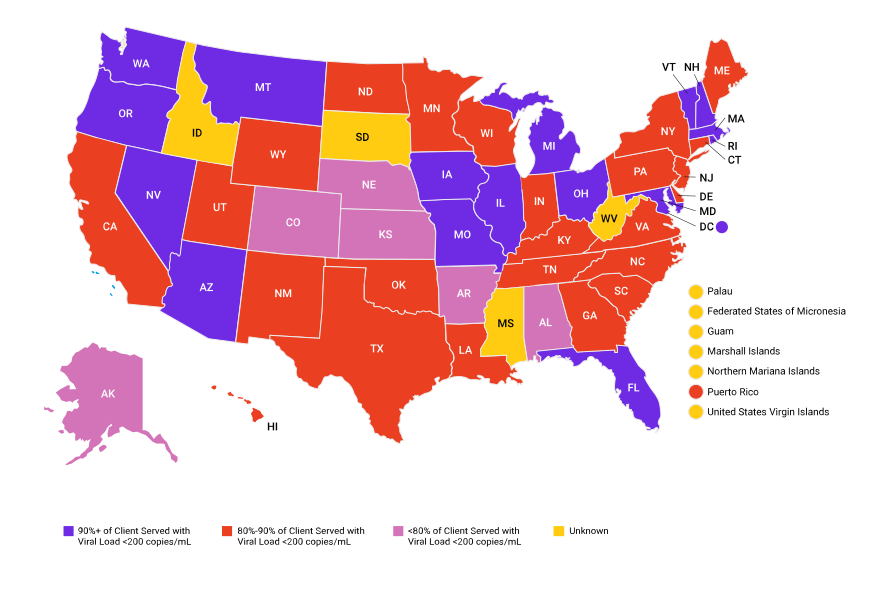
Note: 48 ADAPs reported data. American Samoa, Federated States of Micronesia, Guam, Idaho, Marshall Islands, Mississippi, Northern Mariana Islands, Republic of Palau, South Dakota, Virgin Islands (U.S.), and West Virginia did not provide data.
Table Downloads
Serving the Vulnerable: Equity in Action
ADAPs function as the safety net for those who would otherwise fall through the cracks of the U.S. healthcare system. The strong viral suppression outcomes cited previously were achieved within a client population characterized by low income and demographic diversity.
Income and Poverty. As stipulated by the Ryan White CARE Act, individuals served by RWHAP and ADAP are low-income and under- or uninsured. In CY2024, the vast majority of clients served faced significant economic barriers:
- 40% of all ADAP clients served had incomes at or below 100% of the federal poverty level (FPL).
- 65% of clients served had incomes at or below 200% FPL.
These figures underscore the essential nature of ADAP support. For two-thirds of all clients served, the cost of modern antiretroviral therapy would be completely prohibitive without the intervention of the program.
Race and Ethnicity. ADAPs continue to serve a diverse population, mirroring the demographics of the HIV epidemic in the United States. In CY2024, 43% of ADAP clients served were people of color.
- Black/African American Clients: The majority of clients of color identified as Black/African American. However, longitudinal data shows a slight shift; the proportion of Black/African American clients served in CY2024 was 38%, slightly lower than the 40% reported in CY2019.
- Hispanic/Latinx Clients: There has been a notable increase in service to Hispanic/Latinx populations. By ethnicity, 36% of ADAP clients served in CY2024 were reported as Hispanic/Latinx, a significant increase compared with 28% of clients served in CY2019.4
The "Graying" of ADAP Clients. Effective antiretroviral regimens have enabled PLWHA to achieve near-normal life expectancies. As a result, ADAPs are managing an increasingly older cohort of clients who face the dual challenge of HIV and age-related comorbidities.
- Aging Trends: In CY2024, the majority (55%) of ADAP clients served were 45 years or older.
- Elder Care: The proportion of clients aged 65 years or older has grown to 14%, compared to 9% in CY2019.
This demographic shift necessitates robust coordination between ADAPs and Medicare to ensure seamless coverage for the aging caseload. As clients become eligible for Medicare, ADAPs play a critical role in 'wrapping around' Part D benefits—covering premiums, deductibles, and co-payments to prevent out-of-pocket costs from becoming a barrier to care. Effective coordination involves helping clients select Part D plans that align with ADAP formularies and leveraging the 'TroOP' (True Out-of-Pocket) mechanism, where ADAP expenditures count toward the client’s catastrophic coverage threshold. By optimizing this payer stack, ADAPs not only protect client access but maximize the fiscal efficiency of the RWHAP as the payer of last resort.
ADAP Clients Served, by Demographic, CY2024
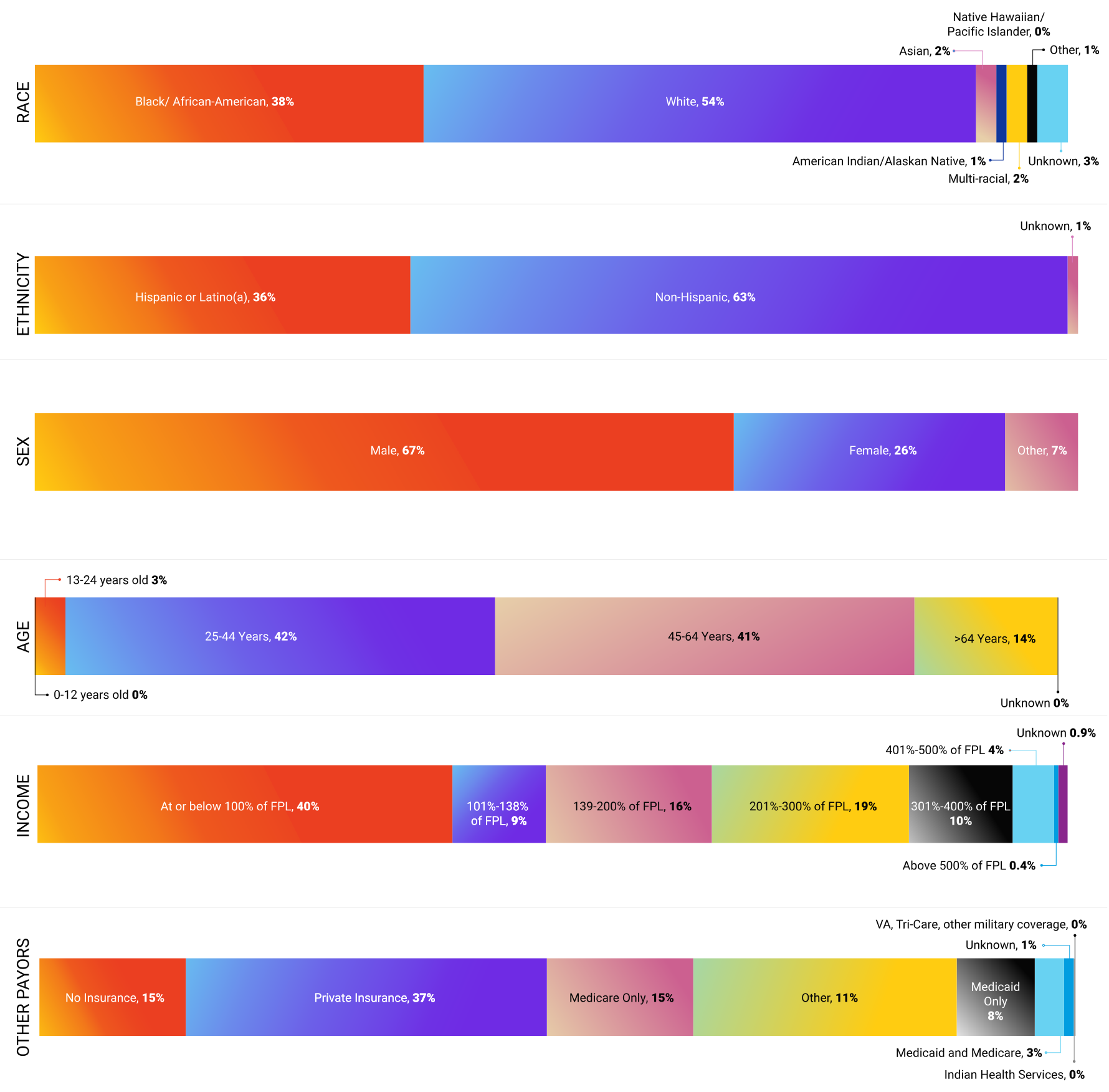
Note: 48 ADAPs reported data. American Samoa, Federated States of Micronesia, Guam, Marshall Islands, Mississippi, Northern Mariana Islands, Republic of Palau, South Dakota, Virgin Islands (U.S.), and West Virginia did not respond.
Table Downloads
1Clients served with full-pay medications only include clients served by the full-pay prescription program for the entire year (or the entirety of a partial year enrolled in the program), with no ADAP coordination with insurance.
2Clients served through an ADAP funded insurance program only includes clients who were enrolled in insurance (i.e., Medicare, Medicaid, private insurance) at any point during the year and for whom payment for premiums and/or cost-sharing was made on their behalf using ADAP funds. Cost-sharing includes any copayments, coinsurance, and/or deductible payments required under the client’s insurance plan or program.
3Clients “served through full-pay medications and an ADAP funded insurance program” includes clients who either spent part of the year in one program and part of the year in the other or they were primarily served by the ADAP-funded insurance program but required full-pay medication program coverage of medications not covered by their insurance.
4Survey respondents provide aggregate race and ethnicity data. Without client-level data, the National RWHAP Part B ADAP Monitoring Project Annual Report is unable to provide breakdowns of intersecting race and ethnicity categories (e.g., number of Hispanic/Latino(a) White-identified ADAP clients served).