

To maintain high suppression rates in a dynamic healthcare environment, ADAPs have had to adapt their service delivery models rapidly. The reporting period of CY2024 was defined by a massive structural shift in the US healthcare safety net—the "unwinding" of Medicaid continuous coverage—and ADAPs proved to be the necessary buffer to prevent mass discontinuation of care.
The Medicaid "Unwinding": A System Tested
A potential challenge for many ADAPs was the March 31, 2023, end of the Medicaid continuous coverage requirement. Authorized by the Families First Coronavirus Response Act, this provision had prohibited states from terminating Medicaid enrollees during the pandemic, allowing millions to stay covered without interruption.
With the "unwinding" of this requirement, states resumed annual Medicaid recertification reviews. As anticipated, a sizeable number of low-income PLWHA lost Medicaid coverage beginning April 1, 2023, and required immediate enrollment (or reenrollment) in ADAP. The data confirms that ADAPs successfully absorbed this shock. Compared with CY2022 benchmark data across 46 ADAPs, the system experienced significant growth in CY2024 (Chart 7, below).
A 30% surge in new enrollments between 2022 and 2024 underscores the elasticity of the ADAP system. However, this flexibility may soon be tested by a second wave of coverage losses. Recent legislation, specifically the "One Big Beautiful Bill Act" (H.R. 1), threatens to implement stringent work reporting requirements and more frequent eligibility renewals for Medicaid expansion groups. The Congressional Budget Office (CBO) estimates such policies could leave millions more uninsured by 2034. The data from the 2024 "unwinding" serves as a preview of the pressure ADAPs will face should these policies be enacted.
ADAP Clients Enrolled and Served, CY2022–CY2024
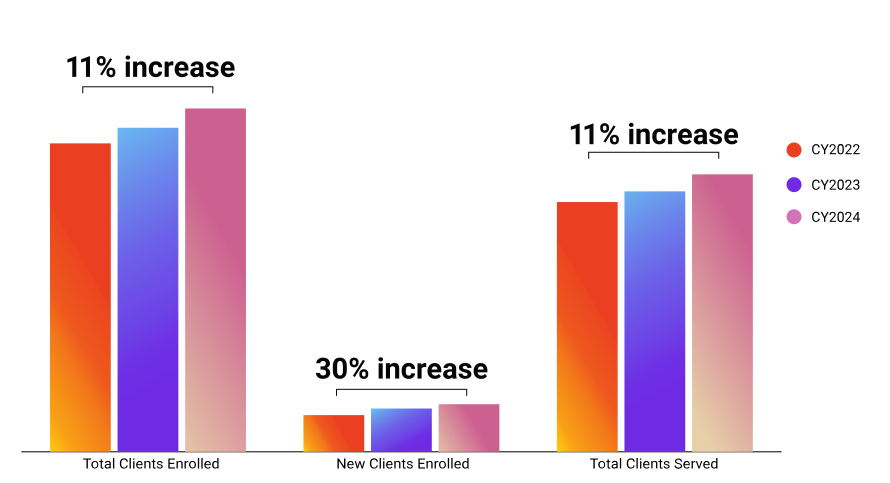
Note: Comparisons are for 46 ADAP programs that reported CY2022, CY2023, and CY2024 client enrollment and served data. Alabama, Alaska, American Samoa, Federated States of Micronesia, Guam, Marshall Islands, Mississippi, Montana, Northern Mariana Islands, Republic of Palau, South Dakota, Virgin Islands (U.S.), and West Virginia are not included.
The "Insurance First" Strategy
While ADAPs act as a safety net, their most cost-effective strategy is maintaining clients in comprehensive health insurance—a distinction that is as clinical as it is fiscal. Unlike RWHAP and ADAP services, which are statutorily limited to outpatient care and specific drug formularies, comprehensive insurance provides access to the full spectrum of healthcare, including essential hospital services and specialty care for non-HIV comorbidities. This holistic coverage is indispensable for an aging client population (55% of whom are now over age 45) that requires management of complex conditions like cardiovascular disease and cancer, effectively transforming the ADAP benefit from a medication delivery mechanism into a gateway for comprehensive health care services.
The Affordable Care Act (ACA) has enabled tens of thousands of ADAP clients to access expanded Medicaid and private insurance. ADAPs support this transition by paying for a portion or all of a client’s premiums, copayments, and deductibles.
In CY2024, ADAPs supported more clients than ever to afford insurance coverage.
- Scale of Support: All 49 responding ADAPs reported using funds for insurance purchasing/continuation.
- Client Volume: The program supported insurance costs for more than 138,000 clients. This support represented $880 million in estimated expenditures, accounting for 33% of total ADAP expenditures for the year, with an average annual cost per insured client of $6,377.
- Private Coverage Mix: 37% of ADAP clients served were enrolled in private insurance (e.g., individual market plans purchased on or off Marketplaces or employer-sponsored coverage). Among clients served who were enrolled in private insurance, 45% were enrolled in a qualified health plan (QHP) on the ACA Marketplace – a 5% decrease and 1% increase in the number of ADAP clients with private insurance in CY2023 and CY2019, respectively, with known Marketplace QHP coverage.
This investment strategy is critical for sustainability, but it faces a looming 'affordability cliff.' The enhanced Premium Tax Credits (ePTCs), which have made Marketplace coverage affordable for millions, expired at the end of 2025. Without congressional action, premiums for currently subsidized enrollees haven risen precipitously. Consequently, ADAP premium payment expenditures will increase substantially in 2026, as programs absorb these spiked costs to prevent clients from losing coverage. Simultaneously, this price shock is expected to drive an increase in PLWHA turning to ADAPs for premium support, as individuals who previously afforded their own share of premiums find themselves priced out of the market. This creates a compounding fiscal strain: ADAPs must pay significantly more per client while supporting a larger volume of clients seeking refuge from soaring commercial rates.
ADAP Clients Served by Insurance Continuation, by Insurance Payment Type, CY2024
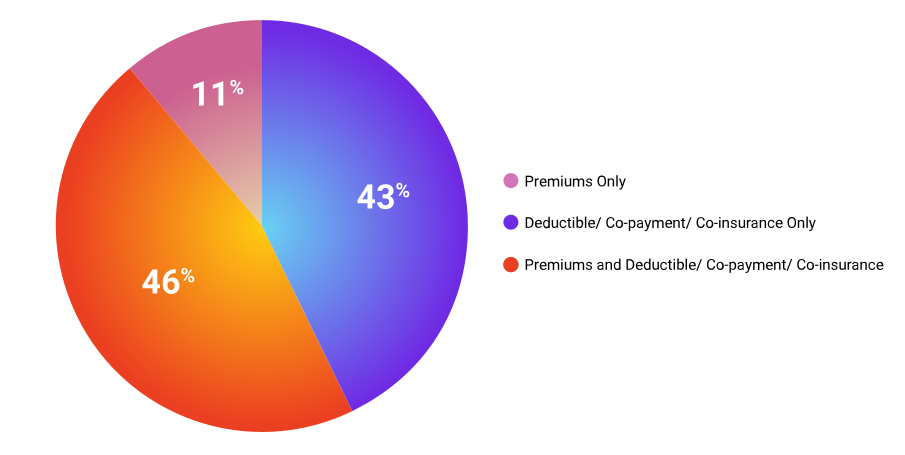
Note: 48 ADAPs reported data. American Samoa, Federated States of Micronesia, Guam, Marshall Islands, Mississippi, Northern Mariana Islands, Republic of Palau, South Dakota, Virgin Islands (U.S.), and West Virginia did not respond.
ADAP Clients Served by Insurance Coverage, CY2002 – CY2024
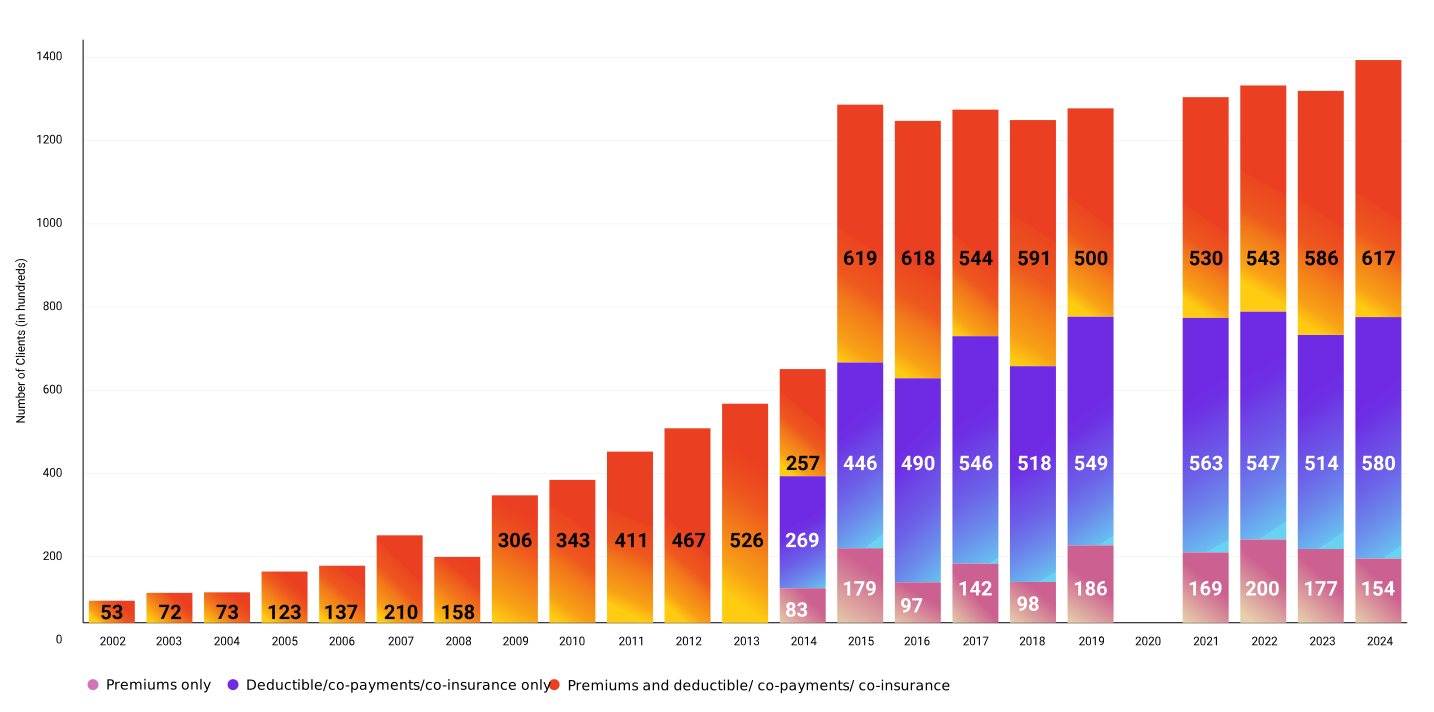
Note: 48 ADAPs reported data. American Samoa, Federated States of Micronesia, Guam, Marshall Islands, Mississippi, Northern Mariana Islands, Republic of Palau, South Dakota, Virgin Islands (U.S.), and West Virginia did not respond.
Table Downloads
The Safety Valve: Full-Pay Medication Programs
Despite the vigorous pursuit of insurance coverage, the "full-pay" medication model remains the core safety valve for the uninsured and underinsured. In CY2024, more than 151,000 clients served required ADAP medication purchasing support to ensure access to at least one prescription drug essential to comprehensive HIV care.
These expenditures are significant. Prescription drug purchasing accounted for more than $1.66 billion in ADAP spending in CY2024, representing approximately 62% of all program expenditures.5 This constitutes a 6.4% increase in medication purchasing expenditures compared to the previous year.
The full-pay program ensures access not just to antiretrovirals, but to a comprehensive formulary that addresses the holistic needs of PLWHA. This includes medications to prevent and treat opportunistic infections, curative direct-acting antivirals for hepatitis C, medications for substance use disorders (including overdose prevention), and treatments for the cardiovascular and metabolic conditions increasingly common in the aging client population.
Table Downloads
Expenditure Volatility
Longitudinal analysis of ADAP expenditures reveals a fiscal landscape defined by distinct phases of contraction and aggressive expansion. While the system has stabilized since the height of the COVID-19 pandemic, the data confirms a "new normal" characterized by high volume and shifting insurance burdens.
Total ADAP Program Expenditures, CY2024
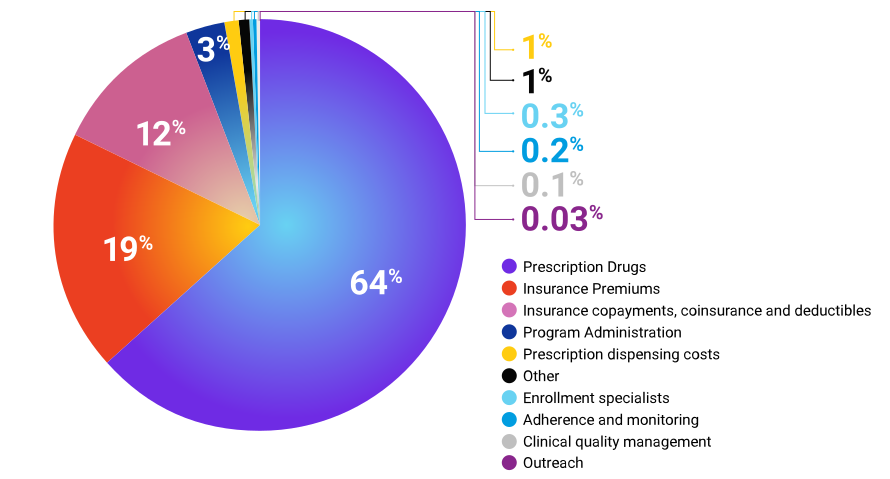
Note: 49 ADAPs reported data. American Samoa, Federated States of Micronesia, Guam, Marshall Islands, Mississippi, Northern Mariana Islands, Republic of Palau, Virgin Islands (U.S.), and West Virginia did not provide data.
To understand the trajectory of these costs, NASTAD analyzed data from 40 jurisdictions with comparable longitudinal data from 2020 through 2024. This analysis reveals that 2024 was not merely a year of high costs, but a year of distinct realignment.
If 2020 represented a historic peak in medication spending driven by pandemic-era access expansions, 2022 served as the post-COVID nadir—a temporary fiscal floor created by the stability of Medicaid continuous coverage.
Since 2022, however, direct medication expenditures have rebounded aggressively. Across the 40 jurisdictions analyzed, prescription drug spending grew by 17% in just two years, rising from $1.31 billion in 2022 to $1.54 billion in 2024. This snapback was driven, in part, by the Medicaid unwinding, which forced ADAPs to absorb a sudden influx of clients returning to the full-pay safety net.
The largest increases occurred in established, high-prevalence jurisdictions. New York saw its drug budget swell by $89.5 million (+26%) between 2022 and 2024. Pennsylvania experienced an explosive 82% increase, adding $50.4 million in direct medication costs, while New Jersey (+$24.0 million) also faced significant surges.
Several states experienced doubling or near-doubling of their drug budgets, signaling a rapid localized shock. Arizona led the nation with a 243% increase (+$8.6 million), followed by Minnesota (+139%), Ohio (+101%), Wisconsin (+100%), and Missouri (+99%). In these states, the safety net didn't just expand; it fundamentally reset at a higher baseline.
While drug spending fluctuated, expenditures on insurance support have followed a trajectory of sustained, long-term growth. A five-year view (2020–2024) reveals that ADAPs are increasingly functioning as "insurance engines," though the nature of that support is changing.
Expenditures on health insurance premiums grew by 15% over the five-year period, rising from $345 million in 2020 to $397 million in 2024. Georgia more than doubled its investment, growing 114% (+$9.3 million) since 2020. California (+$11.3 million) and New York (+$10.4 million) maintained steady, double-digit expansions, reinforcing the "Insurance First" firewall in the nation's largest markets.
The most alarming fiscal signal is found in cost-sharing, which grew more than twice as fast as premiums. Cost-sharing expenditures surged by 36% from 2020 to 2024, reaching $286 million. This disconnect suggests that while ADAPs are buying insurance at a steady rate, the plans themselves are becoming "thinner," shifting a higher burden of deductibles, copayments and coinsurance onto the program. Illinois experienced the most dramatic shift, with cost-sharing expenditures ballooning by 684% (from $2.5 million in 2020 to $20.0 million in 2024). Ohio saw costs rise by 165% (+$15.2 million), and Tennessee nearly doubled its expenditures (+97%, +$15.0 million).
Core ADAP Program Expenditures, CY2020–CY2024
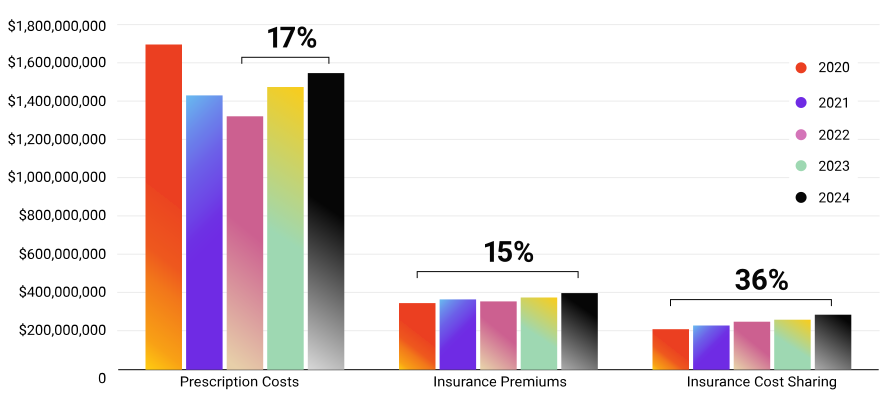
Note: 40 ADAPs reported data for comparisons across all five calendar years.
Table Downloads
5Expenditure data reflects a hybrid accounting model. For Direct Purchase programs, figures represent the net cost paid at the 340B ceiling price. For Rebate programs, figures represent the amount paid to pharmacies before the collection of 340B rebates. Consequently, total program 'net' costs are lower than the reported $1.66 billion.