

Agenda
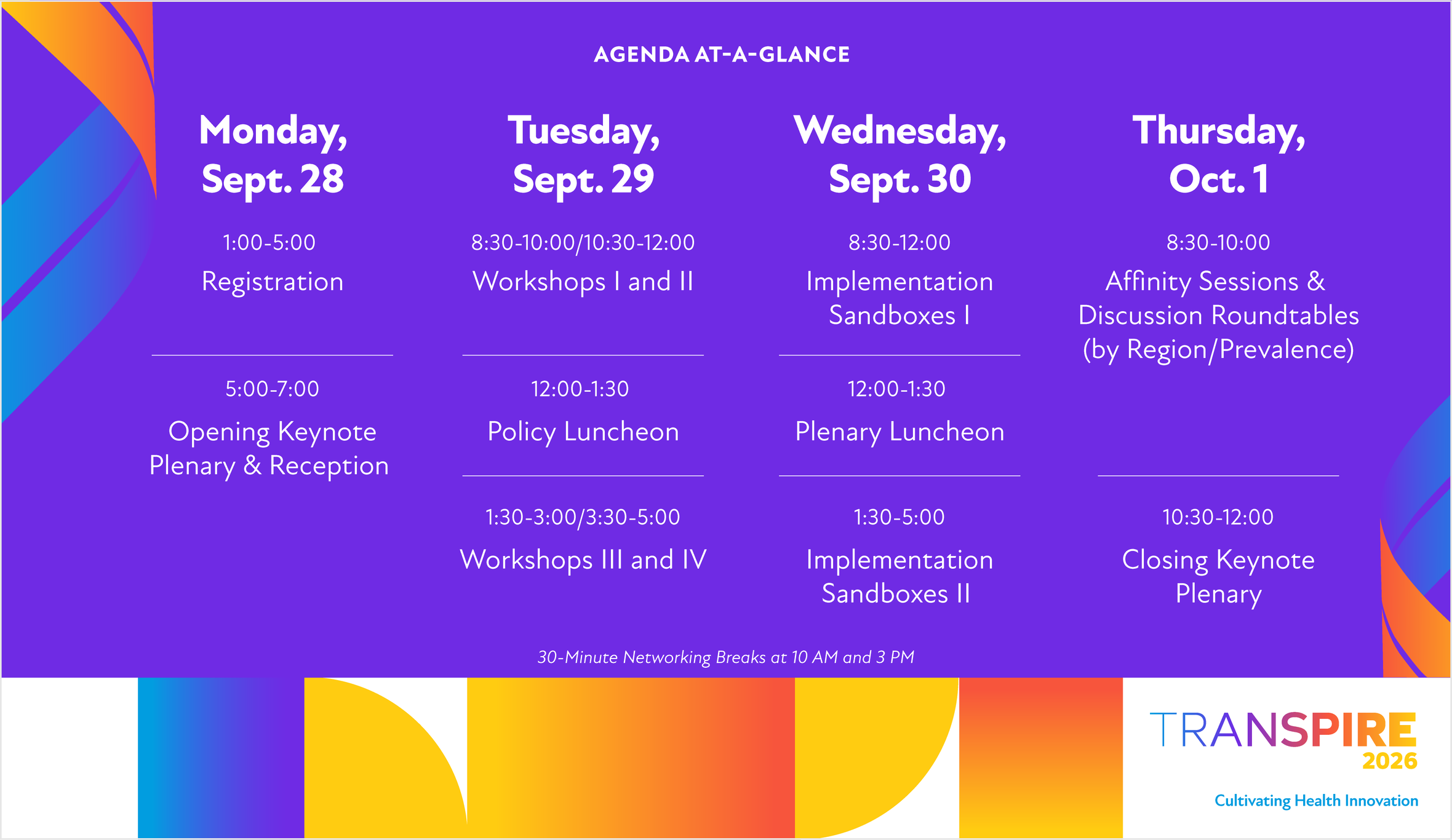
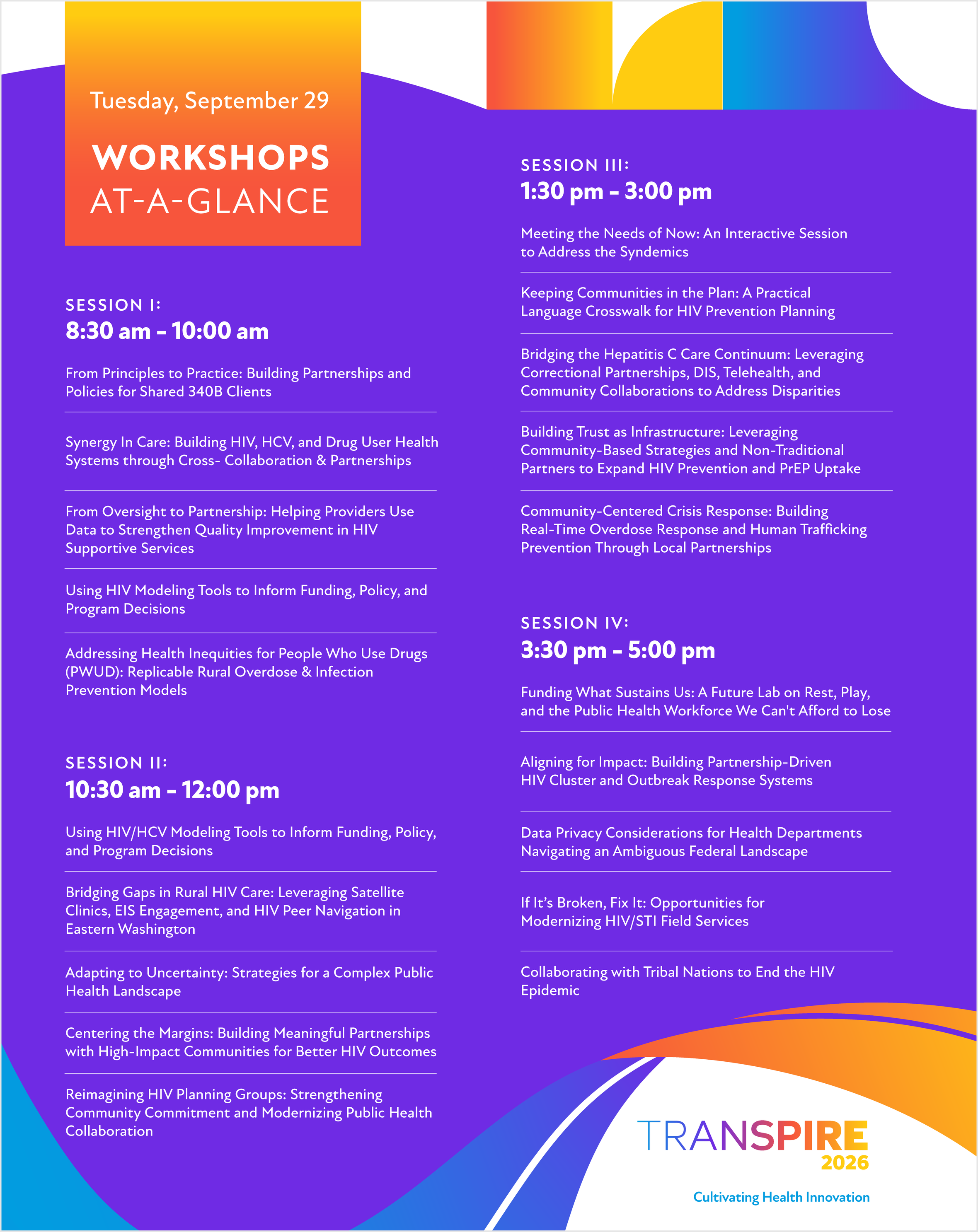
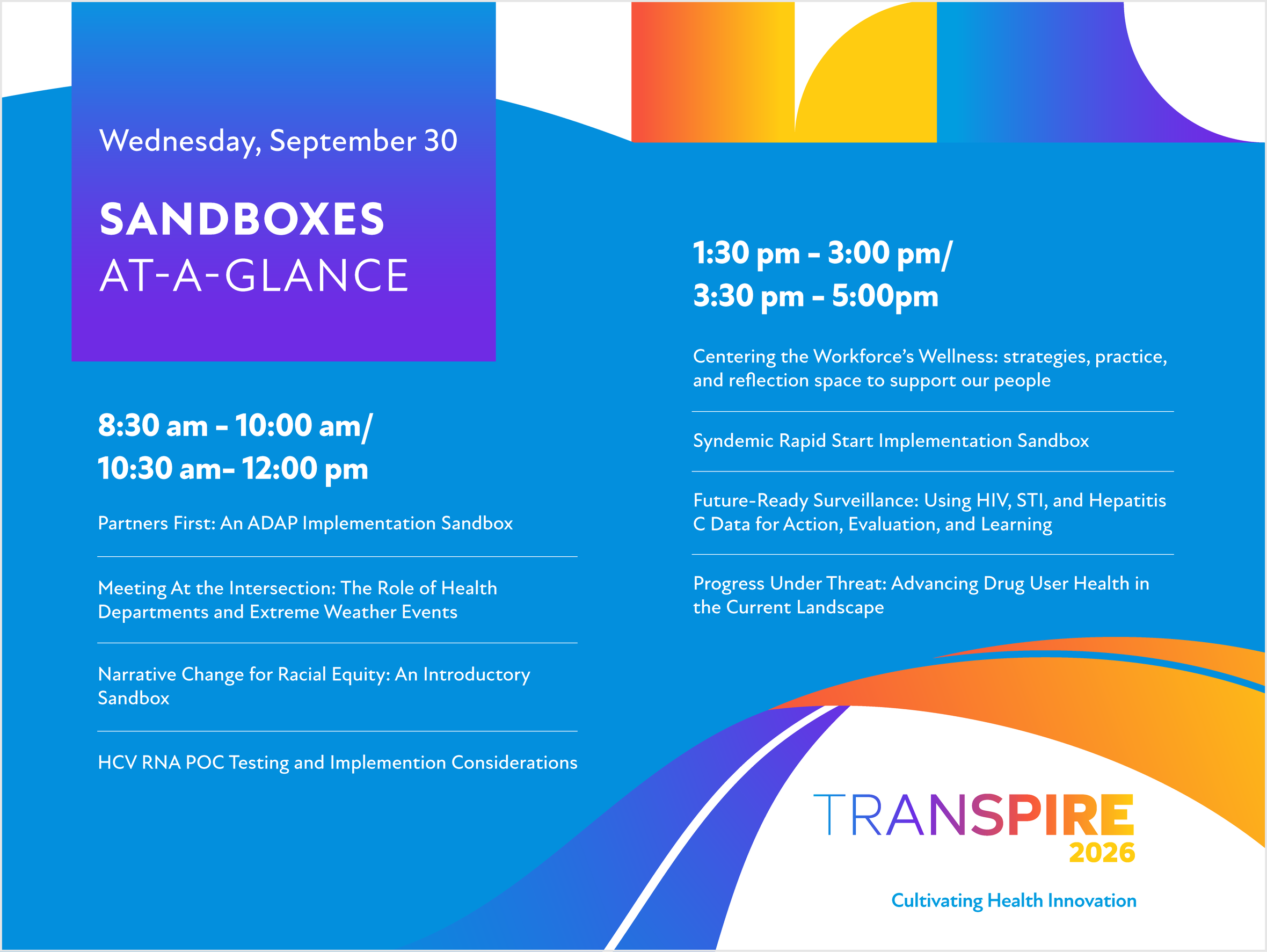
The conference agenda is designed to maximize peer-to-peer TA exchanges and leverage professional networking opportunities.
- Workshops are interactive information-sharing and discussion-based spaces led by health department staff, NASTAD staff, and subject matter experts, and are organized by conference track.
- Implementation Sandboxes are facilitator-led skills-building spaces, where participants troubleshoot current health department challenges, and are organized by program area or discipline.
Monday, Sept. 28
Opening Keynote Plenary & Reception - 5:00 PM - 7:00 PM
Cultivating Innovation in Public Health Practice
Despite the challenges and limitations of public health practice in 2026, state, local, and territorial health departments have remained innovative in their response to HIV, hepatitis, and drug user health within their jurisdictions. The opening plenary will showcase these efforts and explore opportunities for bold and nimble action in 2027 and beyond. A networking reception will follow on the Sonoran Lawn.
Tuesday, Sept. 29
Workshops I - 8:30 AM - 10:00 AM
From Principles to Practice: Building Partnerships and Policies for Shared 340B Clients
ADAPs and other Ryan White HIV/AIDS Program (RWHAP) recipients, federally qualified health centers, Section 318 subgrantees, and safety-net hospitals frequently provide care to the same low-income people with HIV. When these covered entities (CEs) share clients, the 340B Drug Pricing Program creates both an opportunity — maximizing rebates, discounts, and program income that sustain ADAP, ADAP-funded insurance, and RWHAP Part B services — and a compliance imperative: only one CE may claim the statutory 340B price for any given prescription, and duplicate discounts must be prevented. Despite shared interest in 340B savings, ADAPs and partner CEs often operate in parallel rather than coordinated systems. The result is unrealized revenue, avoidable duplicate-discount exposure, and friction at the point of dispense. Co-led by NASTAD staff with two ADAP coordinators representing jurisdictions of varied governance structures and 340B mechanisms, this moderated panel will trace the full arc of shared-client coordination: assessing client overlap and duplicate-discount exposure; identifying and convening partner CEs; selecting model(s) appropriate to local context; drafting policy and contractual language; engaging PBMs and 340B pharmacies; and establishing ongoing monitoring and communication systems. Co-presenters will share what worked, what didn't, and what they would do differently — including how they navigated competing fiscal pressures across CE partners, secured stakeholder buy-in, addressed RWHAP Part B subrecipient concerns, and adapted policy as the 340B environment evolved. The session will close with a structured Q&A focused on attendee-specific scenarios. Participants are encouraged to bring current or anticipated shared-client situations from their own jurisdictions; presenters will offer practical, peer-informed feedback. Sample policy language, MOU components, and exposure-assessment tools will be referenced and made available as follow-up resources.
Synergy In Care: Building HIV, HCV, and Drug User Health Systems through Cross- Collaboration & Partnerships
This presentation explores how cross collaboration and integrated partnerships, at both the state and community level, can strengthen HIV, Hepatitis C (HCV), and drug user health systems. Fragmented services often create barriers that prevent individuals from accessing comprehensive, person centered care. Lack of coordination across state funders lead to duplicative reporting and competing priorities even when there are shared outcomes. Synergy in Care offers models in which state funders, public health programs, clinical providers, community organizations, harm reduction groups, and social services coordinate their efforts to create seamless systems of support. By highlighting shared goals, aligning resources, and developing joint strategies, these collaborations improve linkage to care, expand prevention opportunities, and support long term health outcomes for people affected by HIV, HCV, and substance use.
From Oversight to Partnership: Helping Providers Use Data to Strengthen Quality Improvement in HIV Supportive Services
This interactive session explores how the New York Ryan White Part A Quality Management Program transformed traditional funder-provider relationships into collaborative partnerships that build quality improvement capacity. Participants will learn how a partnership-driven coaching model helped providers implement meaningful non-clinical measures, build sustainable quality improvement capacity, and improve client-centered care. The session will feature an interactive interview with Cornerstone Family HealthCare, providing firsthand insight into their experience participating in the Linking Minds-Improving Care Initiative, including successes, challenges, and lessons learned while implementing quality improvement in a real-world supportive service setting. Attendees will also participate in interactive activities that translate these experiences into practical, actionable strategies they can immediately apply within their own health department.
Using HIV Modeling Tools to Inform Funding, Policy, and Program Decisions
HIV funding decisions have direct implications for prevention, care, treatment access, and long-term public health outcomes. This interactive workshop will introduce the HIV Impact Calculator, a new HIV modeling tool designed to help users explore how changes in prevention and care investments may affect projected HIV outcomes and medical costs over time. The session will focus on how different stakeholders, including advocates, health departments, community-based organizations, providers, researchers, and policymakers, can use modeling tools to support advocacy, program planning, education, and policy initiatives. Participants will test real-world use cases, discuss stakeholder needs, and provide feedback to inform improvements to this tool and the development of future HIV data tools. The HIV workforce needs clear, credible, and accessible data to communicate the impact of HIV prevention and care investments. As funding and policy decisions continue to shape access to services, stakeholders need tools that can help translate complex data into practical insights for decision-making. Different stakeholders need different kinds of information. Advocates need clear, policy-forward messages that explain potential outcomes when prevention and care funding changes. Health departments need scenario-based data to inform planning and resource allocation. Community-based organizations and providers need tools that clearly illustrate prevention, testing, and treatment gaps to partners and communities. Researchers need transparent assumptions and methods that clarify how changes in funding levels relate to HIV diagnosis rates. Policymakers need concise evidence showing how funding decisions could affect health outcomes and costs. This workshop addresses the need to better understand how HIV modeling tools can support these varied use cases. It will also create space for participants to identify what is useful, what is missing, and what future tools should include to better support communities, public health programs, and decision-makers. This 90-minute workshop will be designed as an interactive application and feedback session. Presenters will begin with a brief overview of the HIV modeling tool, including its purpose, key inputs, outputs, and appropriate interpretation of modeled estimates. The introduction will emphasize that modeling tools are designed to support scenario planning and decision-making, not to serve as exact predictions. Participants will then explore how the tool can be used across different stakeholder contexts. Facilitators will walk through sample use cases, such as using modeled data to communicate the impact of sustained HIV prevention funding, examine how changes in PrEP coverage or viral suppression may affect projected outcomes, or develop a policy-forward message based on modeled outputs. Small groups will be assigned stakeholder perspectives, such as advocates, health departments, community-based organizations, providers, researchers, and policymakers. Each group will assess how the tool could support that stakeholder's work, what information is most useful, what elements are unclear, and what additional features or data would make the tool more actionable. The session will close with a facilitated discussion and structured feedback exercise. Participant input will be used to inform improvements to the current tool and guide the development of future modeling and data resources for the HIV workforce.
Addressing Health Inequities for People Who Use Drugs (PWUD): Replicable Rural Overdose & Infection Prevention Models
1) Cochise County, Arizona spans more than 6,200 square miles of rural and frontier terrain along the U.S.-Mexico border, where long distances, slow EMS response times, pervasive stigma, and few traditional services compound the risk of HIV, hepatitis C, and overdose for people who use drugs. Cochise Harm Reduction (CHR), a community-based organization of roughly ten staff, has built a mobile, peer-led service model that reaches these highest-risk residents where they are, and the data show it works. In 2025, CHR documented close to 9,000 engagements in harm reduction services and connected 232 participants to treatment and detox. Annual participant surveys showed measurable behavior change, including reduced overdose risk, increased use of sterile equipment, and improved access to services. Rather than simply distributing supplies, CHR built a whole-person, syndemic model that integrates mobile outreach, an opt-out delivery approach, peer navigation, food access, linkage to care, and low-threshold employment. The organization achieved this by getting the fundamentals right at a small scale and expanding deliberately from there. This session is designed for health department HIV, hepatitis, and drug user health program managers who shape funding, strategy, and data systems rather than deliver direct services. It unpacks not just what CHR does, but why and how. We will cover how a peer workforce of people with lived and living experience drives trust, engagement, and retention; how an opt-out delivery model removes the burden of asking and builds the consistency rural participants depend on; and how CHR uses program data, including point-in-time (PIT) surveys rather than constant participant-level collection, to drive quality improvement, demonstrate impact, secure funding, and communicate value across its local ecosystem. We will discuss why CHR collects each piece of data it does, and how it uses that data for quality improvement, to demonstrate impact, and to secure sustained funding. Most importantly, the session invites participants to consider what is replicable in their own jurisdictions and how health departments can leverage their funding and institutional authority to seed, support, and scale rural harm reduction, through technical assistance, data infrastructure, regulatory flexibility, and political support, not dollars alone. CHR now provides this kind of technical assistance to other rural programs through a Regional Centers of Excellence grant in partnership with NASTAD and CDC. Structured discussion will prompt attendees to share successful models and barriers from their own regions. Attendees will leave with tangible action steps: how to structure funding and reporting requirements that work for small rural grantees, what to look for in a replicable model, and how to use modest, well-designed data systems to make the case for sustained investment in rural harm reduction. 2) People who use drugs (PWUD) in rural Louisiana experience many of the health inequities facing rural communities across the country: lack of transportation, economic constraints, limited providers, and powerful community stigma surrounding issues like HIV, HCV, and substance use. These health inequities combine to exacerbate the syndemic of HIV, HCV, and substance use affecting PWUD in Louisiana. In 2022, the Louisiana Department of Health (LDH) used statewide overdose data and community resource mapping to identify which public health regions most needed support, both in service organizations and infrastructure, to effectively link PWUD to care. Following this analysis, regions 4 and 5, located in south central and southwest Louisiana respectively, presented as needing a higher level of support than other regions. Using the results of this analysis, LDH created the Opioid Response Navigator (ORN) Program using CDC Overdose Data to Action State funding (OD2A-S) in 2023. The ORN program is a pilot program based in public health regions 4 and 5 which, in partnership with community-based organizations in each region, funds positions that focus on direct client outreach and capacity building within service providers in rural communities throughout both regions. The ORN program was created to focus specifically on unhoused and system-involved PWUD and works to improve the health of PWUD in each region of operation as part of the LDH syndemic response. This is achieved through direct client linkage to services and relationship building with organizations in the region that serve or interact with PWUD, including shelters, MOUD providers, churches, and community health centers. This workshop will explore the role that the ORN program plays in addressing the HIV, HCV, and substance use syndemic in the rural areas of Louisiana public health regions 4 and 5. In particular, focus will be placed on how the ORN program's original design was built to address systematic barriers to care for PWUD, the strengths and weaknesses of the program, lessons learned so far, and how those lessons will be applied to strengthen in the program in the future.
Workshops II - 10:30 AM - 12:00 PM
From Data to Elimination - Leveraging Surveillance and Local Health Capacity for Integrated HIV/HCV Care
California - Direct-acting antivirals (DAAs) achieve high cure rates for hepatitis C virus (HCV), but differences in healthcare engagement, treatment access, and monitoring may affect progression through the HCV care cascade and time to viral clearance. Individuals with HIV/HCV coinfection experience accelerated liver disease progression and are a priority population for HCV elimination. While HIV care infrastructure may support HCV care engagement, population-level differences in HCV care outcomes between coinfected and HCV monoinfected individuals in California have not been evaluated.
Aims: (1) Compare progression through the HCV care cascade among HIV/HCV coinfected and HCV monoinfected individuals in California and (2) assess differences in time to observed HCV RNA clearance.
Methods: Individuals with a first reported HCV RNA-positive result between January 1, 2023, and December 31, 2024, will be followed through December 31, 2025. HIV coinfection status will be determined through linkage with the enhanced HIV/AIDS Reporting System (eHARS) and restricted to individuals with an HIV diagnosis reported on or before the year of the qualifying HCV RNA-positive result. The HCV care cascade will be described separately for coinfected and monoinfected individuals, including ever infected, viral testing, initial infection, and cured/cleared. Time to observed HCV RNA clearance, defined as the first reported HCV RNA-negative result following an HCV RNA-positive result, will be estimated using Kaplan-Meier methods and compared by coinfection status. Cox proportional hazards regression will evaluate the association between HIV coinfection and time to clearance.
Results: Findings will be presented at the conference.
Colorado - The Colorado Department of Public Health and Environment (CDPHE) launched the HCV Relink program to identify and re-engage individuals with a reported positive hepatitis C virus (HCV) RNA result but no subsequent negative RNA result indicating viral clearance. Leveraging statewide reporting of positive and negative HCV RNA results since 2019 and adapting principles from HIV data-to-care programs, the initiative aims to connect diagnosed but likely untreated individuals to HCV treatment services.
Methods: CDPHE identified individuals diagnosed with HCV from 2019 to 2024 who lacked a subsequent negative HCV RNA result. Beginning in February 2026, staff reviewed records and conducted outreach using surveillance data, medical records, and public and proprietary databases. Individuals are contacted by phone, text, email, and mail and offered linkage-to-care services, including treatment education, appointment scheduling, financial and insurance navigation, and transportation assistance. Outcomes are tracked in the state surveillance database. The program is supported by partnerships with the Colorado Department of Corrections and a statewide network of low-barrier providers. Individuals incarcerated in state prisons are provided HCV education and guidance on accessing treatment through correctional health services.
Results: As of May 29, 2026, among 3,942 diagnosed but untreated individuals, 1,170 (29%) were determined ineligible for linkage services during pre-contact screening and 702 (18%) had been contacted. Among contacted individuals, 5 relocated out of state, 7 had already received treatment, 53 were unreachable, 612 had not responded, 13 declined assistance, and 12 were successfully reached. Of those reached, 7 accepted linkage assistance, 3 had upcoming treatment appointments, and 3 had been successfully linked to HCV treatment. Updated results will be presented at the conference.
Tennessee - Local health departments play a key role in expanding hepatitis C virus (HCV) testing, treatment, and care coordination, particularly for underserved populations, including rural residents, uninsured or underinsured individuals, those without primary care access, and younger clients. In Tennessee, efforts focused on provider engagement, resource development, and collaborative learning have increased the availability of HCV treatment within local health departments.
Methods: Multiple surveillance activities and monitoring projects were developed to evaluate the impact of expanding HCV treatment services across Tennessee health departments. These initiatives track provider participation, treatment delivery, patient outcomes, case management activities, and treatment-related data through automated surveillance systems.
Bridging Gaps in Rural HIV Care: Leveraging Satellite Clinics, EIS Engagement, and HIV Peer Navigation in Eastern Washington
Rural communities in Eastern Washington continue to face significant barriers to HIV prevention, care, and supportive services, including provider shortages, transportation challenges, stigma, housing instability, and limited access to culturally responsive systems of care. These barriers contribute to delayed linkage to treatment, lower retention in care, and poorer health outcomes for people living with HIV in rural settings. Innovative and community-centered approaches are essential to expanding equitable access to services and improving long-term engagement in care. This presentation will highlight the successful integration of Satellite Clinics, Early Intervention Services (EIS), and HIV Peer Navigation into existing rural HIV care systems to strengthen engagement and improve client outcomes. Participants will learn how satellite clinic models can be utilized through Ryan White Part B - OAHS programming to expand access to HIV medical providers in geographically isolated communities. The presentation will examine strategies for developing rural satellite clinics, including partnership development, staffing considerations, coordination with local agencies, and approaches to reducing transportation and geographic barriers. Presenters will discuss how flexible service delivery models increase continuity of care while improving access to routine HIV medical visits, laboratory monitoring, and supportive services for underserved populations. The session will also explore how Ryan White Part B - EIS funding can be strategically utilized to identify, engage, and support newly diagnosed individuals and people who are out of HIV medical care. Attendees will gain insight into outreach and linkage strategies designed to improve timely access to Medical Case Management, HIV medical care, and housing resources. Specific attention will be given to interdisciplinary collaboration between EIS staff, Disease Intervention Specialists (DIS), medical providers, housing coordinators, and community-based organizations to address social determinants of health that impact retention in care. The presentation will include examples of workflows and referral processes that support rapid engagement following diagnosis and re-engagement efforts for clients who have fallen out of care. In addition, the presentation will demonstrate the critical role of HIV Peer Navigation in improving engagement and trust within rural communities. Peer navigators, particularly those with lived experience, can provide culturally responsive support that helps clients navigate complex healthcare systems, strengthen self-advocacy skills, and increase health literacy. Presenters will discuss WA DOH's HIV peer navigation model that promotes relationship-building, reduces stigma, and supports adherence to treatment and care plans. The session will highlight how peer support can enhance client confidence and empower individuals to actively participate in their healthcare decisions. Through real-world examples and programmatic lessons learned, this presentation will provide attendees with adaptable tools and strategies for strengthening rural HIV service delivery systems. Participants will leave with practical approaches for leveraging OAHS, EIS, and Peer Navigation resources to improve linkage, retention, and overall quality of care for people living with HIV in rural communities. The presentation is designed for HIV service providers, case managers, program administrators, peer navigators, public health professionals, and community organizations seeking innovative strategies to address disparities in rural HIV care access and engagement.
Adapting to Uncertainty: Strategies for a Complex Public Health Landscape
This interactive breakout session will explore practical strategies for sustaining evidence-based public health programs and protecting essential services during periods of transition and uncertainty. The Michigan Department of Health and Human Services Bureau of HIV and STI Programs and the Philadelphia Department of Public Health will share complementary approaches to strengthening public health systems amid evolving funding, policy and operational challenges. Participants will learn how Michigan developed and implemented a collaborative learning model that strengthened insurance navigation capacity across HIV service systems and how Philadelphia has adapted to respond to evolving policy, funding and administrative priorities. After learning about these strategies, participants will have an opportunity to identify approaches they can adapt to their own settings through facilitated discussion, problem-solving activities, and peer learning. Attendees will leave with actionable strategies and resources that can be implemented immediately.
Centering the Margins: Building Meaningful Partnerships with High-Impact Communities for Better HIV Outcomes
People living with and at risk for HIV often navigate intersecting clinical, social, and structural challenges that traditional healthcare systems are not designed to address. These challenges are especially acute for women, transgender, nonbinary, and gender diverse individuals, youth and young adults of color, and people engaged in street based survival activities such as trading sex, using or selling drugs, or living unsheltered. Many of these individuals face significant barriers to entering or remaining in care and are often underserved—or actively excluded—by conventional service models.
This session explores how two innovative public health initiatives—the SPARC (Sex workers Promoting Action, Risk reduction, and Community mobilization) program in Baltimore and the Ryan White Part A Minority AIDS Initiative (MAI) Youth Reach Program in the Washington, DC EMA—use intentional, sustained partnerships to reach communities that conventional systems miss. SPARC integrates center- and outreach-based harm reduction and wraparound services in partnership a network of clinical providers and community-based organizations to meet the needs of highly marginalized individuals. Youth Reach leverages a flexible, customer centered model delivered through a coordinated multisite system that brings together pediatric and adolescent HIV programs, clinical care partners, and community organizations to improve linkage, retention, and viral suppression among youth and young adults of color ages 13–30.
This session will begin with a case study illustrating how community based clinical care embedded within trusted spaces can respond to the complexity of participant needs more effectively than traditional medical settings. It will then expand to describe each program’s model, population, and outcomes—from harm reduction and wraparound services for gender-diverse individuals in Baltimore, to improved care engagement and viral suppression for youth across DC, Maryland, and Northern Virginia. The session will conclude with a systems level discussion of partnership infrastructure, braided funding, sustainability, and the mechanisms that enable these integrative models to function—including coordinated navigation, shared care pathways, peer and community health worker strategies, and flexible service delivery design.
Participants will learn transferable approaches for designing or strengthening cross sector partnerships that center marginalized communities, reduce fragmentation, support continuity of care, and build responsive, equitable HIV service systems.
Reimagining HIV Planning Groups: Strengthening Community Commitment and Modernizing Public Health Collaboration
HIV Planning Groups (HPGs) play a critical role in strengthening collaboration between community members, healthcare providers, and public health departments. By bringing together diverse stakeholders, HPGs help identify service gaps, prioritize resource allocation, and guide the development of culturally responsive prevention and care strategies. They also support health departments by providing community insight that improves HIV surveillance activities, enhances outreach efforts, and promotes more effective and equitable public health programming. This session will explore the current structure and function of HPGs with a meticulous look towards common challenges and opportunities for improvement. Participants will examine lessons learned and best practices from health department jurisdictions working to strengthen community engagement, while also workshopping innovative approaches that enhance HPGs so that they are better equipped to address the array of challenges that communities most impacted by HIV are facing today.
Workshops III - 1:30 PM - 3:00 PM
Meeting the Needs of Now: An Interactive Session to Address the Syndemics
Join us for an interactive session that bridges evidence-based syndemic principles from theory to practice. During this session, participants will learn more about NASTAD’s first-of-its-kind, practice-centered, syndemic-focused TA center called The Syndemic Technical Assistance Center (SynTAC) and apply their own experiences with syndemic approaches to develop tangible strategies for activation. Through an equity-designed, implementation-science framework, participants will be guided through a visioning activity that provides members with the tools to operationalize syndemic activities that are tailored to the needs of their community and health department.
Keeping Communities in the Plan: A Practical Language Crosswalk for HIV Prevention Planning
When federal language restrictions limited how HIV prevention programs could describe the communities they serve, it created a real threat, not just to funding, but to whether those communities would still see themselves reflected in public health plans. This session shares a practical response, a language crosswalk built to protect program integrity while staying compliant with federal rules. Using real examples of restricted terms and their alternatives, this session offers a concrete tool for defending communities' stories, even when the words programs are allowed to use keep changing. Attendees will work through their own restricted terms and draft alternative language for their state’s plan, leaving with the start of a crosswalk they can bring back and finish once they’re back in their jurisdiction.
Bridging the Hepatitis C Care Continuum: Leveraging Correctional Partnerships, DIS, Telehealth, and Community Collaborations to Address Disparities
Washington:
Hepatitis C virus (HCV) infection remains a major public health challenge in the United States, affecting an estimated 2.4 million adults nationwide. Although the prevalence of HCV is approximately 9 times higher in incarcerated populations than in the general population, treatment for HCV in prisons and jails is rare due to the length and cost of treatment, difficulty of widespread testing, and competing priorities. Public health agencies may serve as key partners in overcoming some of these challenges. Between 2023 and 2026, the Washington State Department of Health (WADOH) developed partnerships with both the Washington State Department of Corrections (WADOC) and county jails to increase HCV treatment in carceral settings. The purpose of this presentation is to describe two successful partnerships between carceral facilities and public health for treating HCV, share lessons learned, and identify supports that would make similar programs successful in other states.
Michigan:
Despite the availability of curative direct-acting antiviral (DAA) therapies, significant barriers to accessing hepatitis C virus (HCV) testing and treatment remain. In 2021, the Michigan Department of Health and Human Services (MDHHS) launched a statewide HCV elimination initiative that included creation of a dedicated Hepatitis C DIS team consisting of seven full-time staff focused exclusively on HCV outreach, education, and linkage to care. In December 2024, the program expanded by hiring a fulltime nurse practitioner to provide statewide telehealth-based HCV evaluation and treatment, creating a comprehensive public health model that supports individuals from diagnosis to cure.
San Francisco:
In 2024, surveillance data showed that the Tenderloin (TL) and South of Market (SoMA) neighborhoods in San Francisco have higher rates of Hepatitis C (HCV). The TL has one of the highest poverty rates in San Francisco and most permanent supportive housing (PSH) sites are in both the TL and SoMA. To address these disparities, the San Francisco Department of Public Health (SFDPH) Wellness Initiative for Sexual Health Equity and Safer-use (WISHES) team partnered with several groups to create a pilot offering peer lead HCV workshops and point of care testing events at PSH sites in the TL and SoMA. This project provides low barrier health access and education, in impoverished areas, and advances community health for areas disproportionately impacted by overdoses, HCV, HIV, and sexually transmitted infections (STIs).
This initiative highlights the role of health departments in utilizing surveillance reporting and data to inform strategic community partnerships and programming to address health disparities by bringing services directly to impacted communities. Results have shown that integrating peer-led education, evidence-based strategies, rapid testing services, and immediate navigation support at PSH sites is feasible, acceptable, and effective in strengthening trust, engagement, and addressing health equity among communities disproportionately impacted by HCV.
Building Trust as Infrastructure: Leveraging Community-Based Strategies and Non-Traditional Partners to Expand HIV Prevention and PrEP Uptake
Houston:
Pre-Exposure Prophylaxis (PrEP) is a highly effective HIV prevention strategy; however, uptake remains disproportionately low among cisgender and transgender women of color in Houston/Harris County. Structural barriers, stigma, and limited access continue to limit prevention impact in priority communities. In 2024, the Houston Health Department (HHD) received an 8-month award for expanding HIV prevention and PrEP coverage among Black and Hispanic cisgender and transgender women. This abstract outlines strategies used and discusses critical lessons learned to inform future interventions.
Baltimore City:
Centering prioritized communities in the development of behavioral health and disease prevention campaigns is a crucial component that can impact the success of message communication. In 2016, the Baltimore City Health Department's (BCHD) HIV/STI prevention team developed Baltimore In Conversation (BIC), a community engagement framework that utilizes the tenets of human centered design, storytelling, and social innovation to strengthen HIV prevention efforts and rebuild trust within communities disproportionately impacted by infectious diseases. BIC explored how public health professionals moved beyond traditional health messaging and co-created campaigns with communities rather than for communities. Through a series of community conversations and small group forums, BCHD developed the #PeopleWhoLookLikeMe (#PWLLM) campaign, a culturally responsive HIV prevention initiative that centered authentic representation, lived experience, and community voice. The team, trained in social design at the Maryland Institute College of Arts (MICA), identified community needs, hidden barriers, and developed audience-centered messaging that reflected the realities of the populations served that were used to develop campaign materials and messaging. Through strategic partnerships, intentional storytelling, and targeted media placement across social media, dating applications, television, and community events, the campaign reached more than the documented tens of thousands of viewers while fostering meaningful conversations about HIV prevention and care.This workshop is intended for health department staff who lead community engagement efforts, including working with HIV Planning Groups, those that liaise with marketing and advertising vendors to develop health messaging, or manage social media content. Using the #PWLLM campaign model, workshop participants will be provided with scenarios through which they will engage in a hands-on design exercise rooted in Human Centered Design methodology. Participants will leave with practical tools, worksheets, and a replicable framework for developing culturally grounded HIV/STI prevention campaigns that increase trust, engagement, and community lead and ownership. Participants will be asked to complete a survey on workshop learning experience.
Community-Centered Crisis Response: Building Real-Time Overdose Response and Human Trafficking Prevention Through Local Partnerships
Minnesota:
This session will describe how the Minnesota Department of Health (MDH) used coalition engagement to develop a statewide viral hepatitis elimination plan. Identifying activities essential to hepatitis elimination requires input from a range of organizations serving those at risk of or living with viral hepatitis. To support this work, a coalition was established to strengthen existing partnerships and build new relationships between health care systems, community-based organizations, local public health, Tribal Health, Department of Corrections (DOC), and MDH.
The SOAR Initiative
The overdose crisis continues to evolve rapidly as drug supplies become increasingly unpredictable and contaminated with emerging substances. Traditional public health surveillance systems often struggle to provide timely, community-level alerts capable of reaching people at highest risk before overdoses occur. In response, The SOAR Initiative developed Bad Batch Alert (BBA), a statewide, community-centered overdose alert network that combines technology, grassroots outreach, and strategic partnerships to deliver real-time overdose surge and drug supply warnings across Ohio. This session will explore how BBA integrates reports from community members, harm reduction organizations, outreach workers, healthcare systems, and public health partners to identify overdose spikes and dangerous changes in the drug supply. Presenters will discuss how alerts are rapidly disseminated through text messaging, social media, community responders, and street outreach efforts to ensure critical information reaches individuals who may lack reliable access to phones, transportation, healthcare, or internet services. Special attention will be given to the importance of meaningful collaboration with people who use drugs and trusted community organizations in designing and implementing effective overdose response systems. The presentation will highlight how partnerships with local outreach teams, treatment providers, public health agencies, and grassroots organizations have strengthened Ohio's capacity to respond quickly during overdose surges while increasing linkage to care, naloxone distribution, and harm reduction engagement. The session will also address challenges faced in rural and underserved communities, including stigma, limited healthcare infrastructure, transportation barriers, and rapidly shifting drug markets. Presenters will share lessons learned from scaling BBA statewide, including strategies for maintaining trust, ensuring culturally responsive communication, and adapting to funding and policy challenges within the evolving public health landscape. Attendees will leave with practical tools and replicable strategies for developing community-driven overdose alert systems and strengthening cross-sector partnerships to improve overdose prevention and public health outcomes in their own jurisdictions.
Workshops IV - 3:30 PM - 5:00 PM
Collaborating with Tribal Nations to End the HIV Epidemic
The Inter Tribal Council of Arizona Tribal Epidemiology Center staff will present on work that they have done with tribal nations to end the HIV epidemic and share knowledge on effectively work with tribes to improve HIV health outcomes.
Funding What Sustains Us: A Future Lab on Rest, Play, and the Public Health Workforce We Can't Afford to Lose
Public health is running on fumes. Health department staff are absorbing the compounding weight of federal funding threats, Medicaid restructuring, executive order scrutiny, and the daily grief of serving communities navigating overdose, HIV, and syndemic issues. The communities we fund, including people who use drugs, people living with HIV, peer workers, and frontline community-based partners, are carrying the same weight from the other side of the table. Yet rest and play remain conspicuously absent from our budgets, our logic models, and our reporting frameworks. They are treated as luxuries, as private problems, or as line items too "soft" to defend to reviewers and legislators.
This 90-minute breakout invites attendees into a future lab, a facilitated and structured space for honest deconstruction and earnest imagination. Drawing on speculative design methodology and the lineage of Black feminist visionary practice (adrienne maree brown, Tricia Hersey, and Walidah Imarisha), the session treats imagination as a serious public health competency rather than an indulgence. Grounded in the reality that workforce sustainability is no longer just a wellness conversation, but a continuity of operations conversation; the session explores what becomes possible when we intentionally design systems that support restoration. The cost of replacing a burned-out epidemiologist, prevention coordinator, or peer specialist is well documented. The cost of not funding what sustains them is borne by the communities we serve. Rest and play are not separate from public health outcomes. They are infrastructure.
Aligning for Impact: Building Partnership-Driven HIV Cluster and Outbreak Response Systems
Intentional coordination between Cluster Detection and Response (CDR) activities and Ending the HIV Epidemic (EHE) implementation strategies—grounded in strong partnerships that extend beyond traditional public health infrastructure—can strengthen and sustain HIV response efforts. This work depends on meaningful collaboration that connects public health systems with the communities, organizations, and providers most directly engaged in HIV response. This 90-minute interactive workshop will explore how health departments can enhance alignment between EHE implementation and CDR activities through collaborative, partner-driven approaches. Participants will examine practical strategies to strengthen coordination, improve communication, and build integrated, sustainable systems that support more responsive and scalable HIV response efforts. By positioning EHE implementation and CDR activities as interconnected, partnership-driven public health efforts, this session will provide attendees with actionable strategies to deepen collaboration, strengthen system-level coordination, and enhance jurisdictional capacity to detect, respond to, and prevent HIV clusters and outbreaks. Emphasis will be placed on how integrated systems, transparent communication, and relationship-centered engagement can reduce silos, strengthen trust, and support more durable public health infrastructure.
Data Privacy Considerations for Health Departments Navigating an Ambiguous Federal Landscape
This breakout session will address data governance considerations for health departments managing sensitive information amid uncertainty about federal data access and sharing policies. Presenters will discuss best practices for data governance, privacy, and sharing decisions. Attendees will be provided with updates on the current federal legal landscape of health data security, and presenters will illustrate how state and federal policy may diverge by walking through the tangible example of current CMS practices and policies on cross-agency sharing of Medicaid data. The session will emphasize audience participation and hold ample time for group discussion.
If It’s Broken, Fix It: Opportunities for Modernizing HIV/STI Field Services
In this interactive workshop, facilitators will share lessons learned and best practices for HIV and STI field services programs from NASTAD’s Partner Services Learning Collaborative. Participants will also discuss opportunities for progressing local field services activities and addressing common challenges.
Policy Luncheon - 12:00 PM – 1:30 PM
Protecting Choice, Stability, and Innovation for Healthy Aging with HIV
People with HIV are living longer, healthier lives than ever before, transforming HIV into a chronic condition that many will manage for decades. As the population ages, maintaining treatment choice, continuity of care, and access to future innovations becomes increasingly important, particularly as individuals navigate comorbidities, polypharmacy, and evolving health needs. This plenary will explore how health departments, advocates, and community leaders can help create a policy environment that supports healthy aging while safeguarding the innovation and treatment options that make it possible.
Wednesday, Sept. 30
Implementation Sandboxes I - 8:30 AM – 10:00 AM & 10:30 AM - 12:00 PM
Partners First: An ADAP Implementation Sandbox
Through real-world examples, facilitated discussion, and interactive exercises, participants will explore approaches for building and sustaining partnerships across public health, healthcare, and community-based systems. The session will highlight the importance of engaging community-based organizations, Ryan White HIV/AIDS Program partners, healthcare providers, and other stakeholders as active collaborators in EHE and CDR planning, decision-making, and response implementation—not solely as referral partners or downstream participants.
Meeting at the Intersection: Harm Reduction and Weather-Related Emergencies
Climate change is a public health crisis. In this session we will discuss how weather-related emergencies impact people who use drugs (PWUD) and the key role that health department and syringe service providers (SSP) partnerships can play in meeting the needs of PWUD. This session will feature health department and SSP guest speakers who will share lessons learned from their work. And participants will have an opportunity to engage in a mock emergency scenario planning session to identify key activities to support PWUD during weather related emergencies and assess current capacity. This session is intended for those working in harm reduction programs or who support PWUD but is also open to all attendees.
Narrative Change for Racial Equity: An Introductory Sandbox
Narratives shape how people understand the world and what they believe is possible. For decades, harmful stories rooted in fear and division have shaped policies and weakened democracy. This training explores how we can interrupt those patterns and build new narratives that support justice, belonging, and a multiracial democracy. Participants will leave with a stronger understanding of current harmful narrative power and practice applying practical tools for change.
HCV RNA POC Testing and Implementation Considerations
Participants will engage in collaborative problem-solving to identify opportunities to strengthen communication across systems, align EHE and CDR priorities and operational workflows, and improve coordination between surveillance, prevention, care, and response activities. The workshop will also focus on developing shared approaches to outbreak detection and response that reflect joint ownership and ongoing collaboration.
Implementation Sandboxes II - 1:30 PM – 3:00 PM & 3:30 PM - 5:00 PM
Centering the Workforce’s Wellness: Strategies, Practice, and Reflection Space to Support our People
Many within the health department and community workforce have a true and personal commitment to syndemic work. Still, workplaces need to take a trauma-informed and person-centered approach to help reduce professional burnout and create supportive work environments for these individuals.
This sandbox centers the wellness of our most important resource, our people – the staff in our health departments, community-based organizations, and harm reduction groups. In this session, three evidence-based strategies that have been identified to support the wellness of our public health workforce will be covered: stay interviews, vicarious trauma prevention and mitigation, and interventional journaling. This session will introduce NASTAD’s new Workforce Wellness Toolkit and provide an overview of each tool and resource included, incorporate wellness exercises, and include activities such as role play and journaling to move newly introduced concepts from theoretical to practical in real time. The session is a good fit for those interested in reflective leadership, supervisors who desire to be more supportive of their staff, and individuals interested in improving their wellness practices.
Syndemic Rapid Start Implementation Sandbox
Goal: Equip health department staff with skills to implement and expand Rapid Start programs within their jurisdictions for HIV treatment, HIV prevention, and hepatitis C treatment (ARVs, DAAs, PrEP, nPEP)
Learning Objectives:
Describe the major challenges and barriers to Rapid Start implementation and/or expansion.
Understand best practices for Rapid Start for HIV prevention, hepatitis C treatment, and HIV treatment
Identify opportunities to leverage public, industry, and community partnerships to effectively implement Rapid Start across the jurisdiction’s service area in both funded and non-funded programs
View rapid treatment initiation through a systems lens with an emphasis on utilizing public health data sources and continuous quality improvement methodologies.
Identify at least one actionable strategy that can be implemented in their jurisdiction to implement, improve, or expand Rapid Start initiatives."
Future-Ready Surveillance: Using HIV, STI, and Hepatitis C Data for Action, Evaluation, and Learning
Public health surveillance is evolving alongside changing demographics, aging populations, co-occurring conditions, emerging risk patterns, and increasing expectations for timely, integrated, and actionable data. Yet HIV, STI, and hepatitis C surveillance systems often remain fragmented across diseases, programs, agencies, and different points along the prevention and care continuum.
This interactive Implementation Sandbox will bring health department surveillance professionals together to examine how the surveillance landscape has changed, share jurisdictional strengths and works in progress, and collectively define what future-ready HIV, STI, and hepatitis C surveillance should look like. During the first half, participants will reflect on developments over the past decade and explore current challenges related to fragmented systems, changing data sources and surveillance needs, data integration, syndemic and prevention surveillance, risk factor and congenital surveillance, care cascades, comorbidities, and cross-agency collaboration.
During the second half, participants will work in peer groups to envision the future of public health surveillance and identify what will be required to move toward that vision. Drawing on real jurisdictional experiences, participants will exchange promising practices, troubleshoot current and emerging challenges, and distinguish priorities that require immediate action from longer-term opportunities. Monitoring, evaluation, and learning principles will be embedded throughout the session to help participants examine what their data reveal, assess whether current approaches are generating their intended value, and determine how findings can inform prevention, care, policy, and programmatic decisions.
Participants will leave with peer-informed strategies, new connections with surveillance colleagues, and a practical action plan identifying what their jurisdiction can act on now, what requires longer-term planning, and how progress, impact, and learning will be measured.
Progress Under Threat: Advancing Drug User Health in the Current Landscape
Drug user health, particularly the maintenance and scale-up of harm reduction and syringe services programs, is an essential component of a public health approach to ending HIV/AIDS, viral hepatitis, and intersecting epidemics. As the federal funding and policy landscape continues to evolve, state and local health departments are navigating increasing uncertainty while identifying opportunities to sustain essential services and strengthen public health infrastructure.
This implementation sandbox will open with a speaker who will set the stage by describing their efforts to expand harm reduction services locally, sharing their experience assessing and mitigating significant risk while also working towards an expansive vision of drug users' health and rights. Through individual reflection and peer support from small-group conversations, attendees will analyze the current threats and opportunities to drug user health within their jurisdictions. Attendees will then engage in real-time, practical action planning to identify concrete strategies to protect existing progress, strengthen resilience, and pursue opportunities to expand or innovate harm reduction services in their communities.
Plenary Luncheon - 12:00 PM – 1:30 PM
From Prevention to Functional Cure: Positioning qHBsAg in the US Hepatitis B Care Continuum
NASTAD and GSK will present a lunch panel exploring how quantitative HBsAg can fit within the U.S. hepatitis B public health continuum—from prevention and screening to linkage, monitoring, and functional cure. Through a practical discussion among hepatology and public health experts, the session will clarify the current and emerging role of qHBsAg while highlighting implementation considerations in treatment end elimination.
Thursday, Oct. 1
Affinity Sessions and Discussion Roundtables - 8:30 AM - 10:00 AM
Estimated HCV prevalence by U.S. state and D.C.
We estimated HCV prevalence in the contiguous U.S. states using a Bayesian spatial model and a wide variety of jurisdictional and external datasets. These estimates represent people with diagnosed and undiagnosed chronic HCV infection and are anchored to the most recent national estimate, approximately 4 million people with HCV infection. State-level estimates will be presented alongside a description of the data sources used in the model.
Pacific Island Jurisdictions Peer-to-Peer Discussion
This affinity session is to support networking and peer knowledge exchange between the Pacific Island Jurisdictions.
Building Stronger Partnerships: TRANSPIRE Sponsor & Member Affinity Session
This facilitated affinity session will bring together TRANSPIRE sponsors and NASTAD members for focused conversation and relationship-building. The session is designed to create space for sponsors to better understand the priorities, challenges, and emerging needs of health departments, while giving members an opportunity to learn more about the expertise, resources, and solutions sponsors bring to the field. Through guided discussion and informal networking, participants will identify areas of shared interest, explore opportunities for collaboration, and strengthen relationships that can continue beyond TRANSPIRE. The session will emphasize meaningful engagement, practical connections, and partnerships that support health departments and the communities they serve.
Low Prevalence Jurisdictions Discussion Group
NASTAD jurisdictions of similar size gather for a facilitated discussion of emerging issues facing their health departments. Session outcomes will inform NASTAD's technical assistance delivery. This session includes the following jurisdictions: AL, American Samoa, Guam, HI, ID, IA, ME, Marshall Islands, Micronesia, MT, NE, NH, ND, Norhern Mariana Islands, Palau, RI, SD, USVI, VT, WV, and WY.
Moderate Prevalence Jurisdictions Discussion Group
NASTAD jurisdictions of similar size gather for a facilitated discussion of emerging issues facing their health departments. Session outcomes will inform NASTAD's technical assistance delivery. This session includes the following jurisdictions: AL, AR, Baltimore, CO, DE, DC, IN, KS, KY, MN, MO, NV, NM, OK, OR, PR, San Francisco, UT, WA, and WI.
High Prevalence Jurisdictions Discussion Group
NASTAD jurisdictions of similar size gather for a facilitated discussion of emerging issues facing their health departments. Session outcomes will inform NASTAD's technical assistance delivery. This session includes the following jurisdictions: AZ, CA, Chicago, CT, FL, GA, Houston, IL, Los Angeles, LA, MD, MA, MI, MS, NJ, NY, New York City, NC, OH, PA, Philadelphia, SC, TN, TX, and VA.
Closing Keynote Plenary - 10:30 AM - 12:00 PM
Lead, Lift, and Let Go: Cultivating Community Centered Public Health Leaders
This session highlights the 2026-2027 Chair’s Campaign, “Lead, Lift, and Let Go: Cultivating Community Centered Public Health Leaders”. The campaign, led by NASTAD Board Chair, Maria Jackson, calls on NASTAD members to mentor the next generation of public health leaders and guide them into a public health space that centers communities and vulnerable populations. This roundtable discussion will bring together health professionals who are at different stages in their leadership journey and curate a space for them to discuss what it is needed for emerging public health professionals to succeed and what current leadership can do to support them.